Stock Story: Hermès
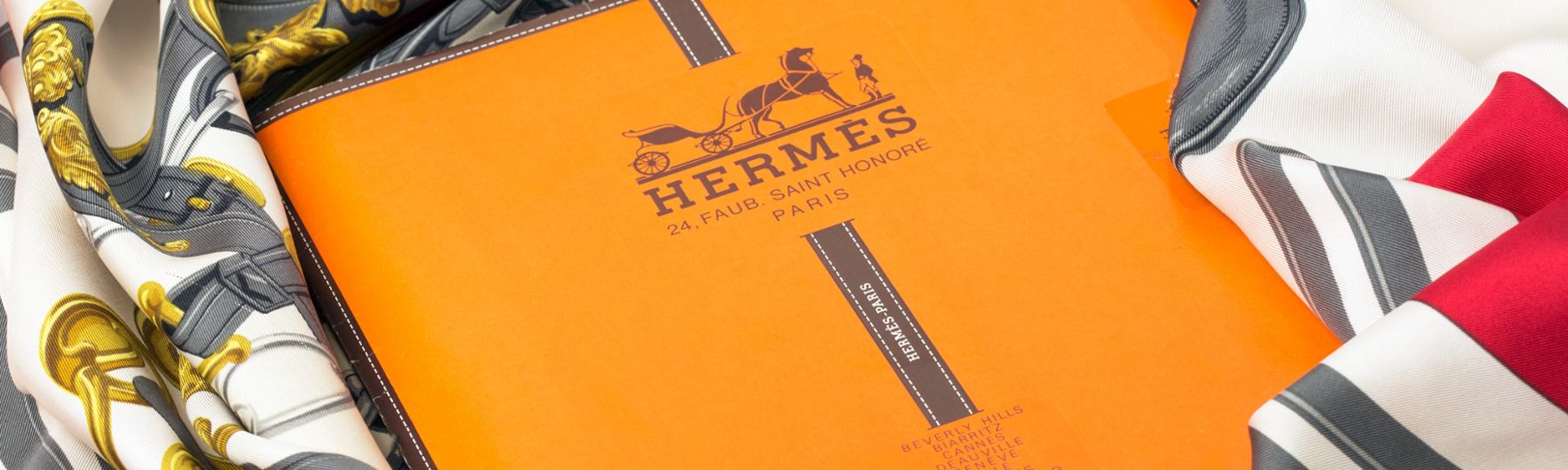
Hermès was founded in Paris in 1837 as a maker of harnesses and saddles for Europe’s horse-drawn elite. From the outset, the company was defined by functional excellence and craftsmanship rather than fashion. Its first decisive strategic shift came with the rise of the automobile, which structurally reduced demand for equestrian equipment. Rather than defend a declining end market, Hermès redeployed its leather expertise into luggage and travel goods, applying the same standards of durability and quality to a new era of mobility.
That early pivot is instructive. Hermès adapted to technological change without diluting its identity, a pattern that has repeated over nearly two centuries. Today, the group is one of the most profitable companies in global luxury, with activities spanning leather goods, ready-to-wear, silk, jewellery, watches and homewares. Leather goods remain the economic engine, accounting for the majority of profits, while the broader portfolio reinforces the maison’s cultural relevance and desirability. Despite operating more than 300 stores globally and employing over 20,000 people, Hermès continues to behave less like a conglomerate and more like a craft maison, prioritising long-term brand equity over near-term growth.
This mindset underpins why we find Hermès such a compelling business. Its brand equity is built not on seasonal fashion or loud marketing but on function, heritage and longevity. Many of its most recognisable products, including the Birkin and Kelly bags or the silk carré, have remained largely unchanged for decades.
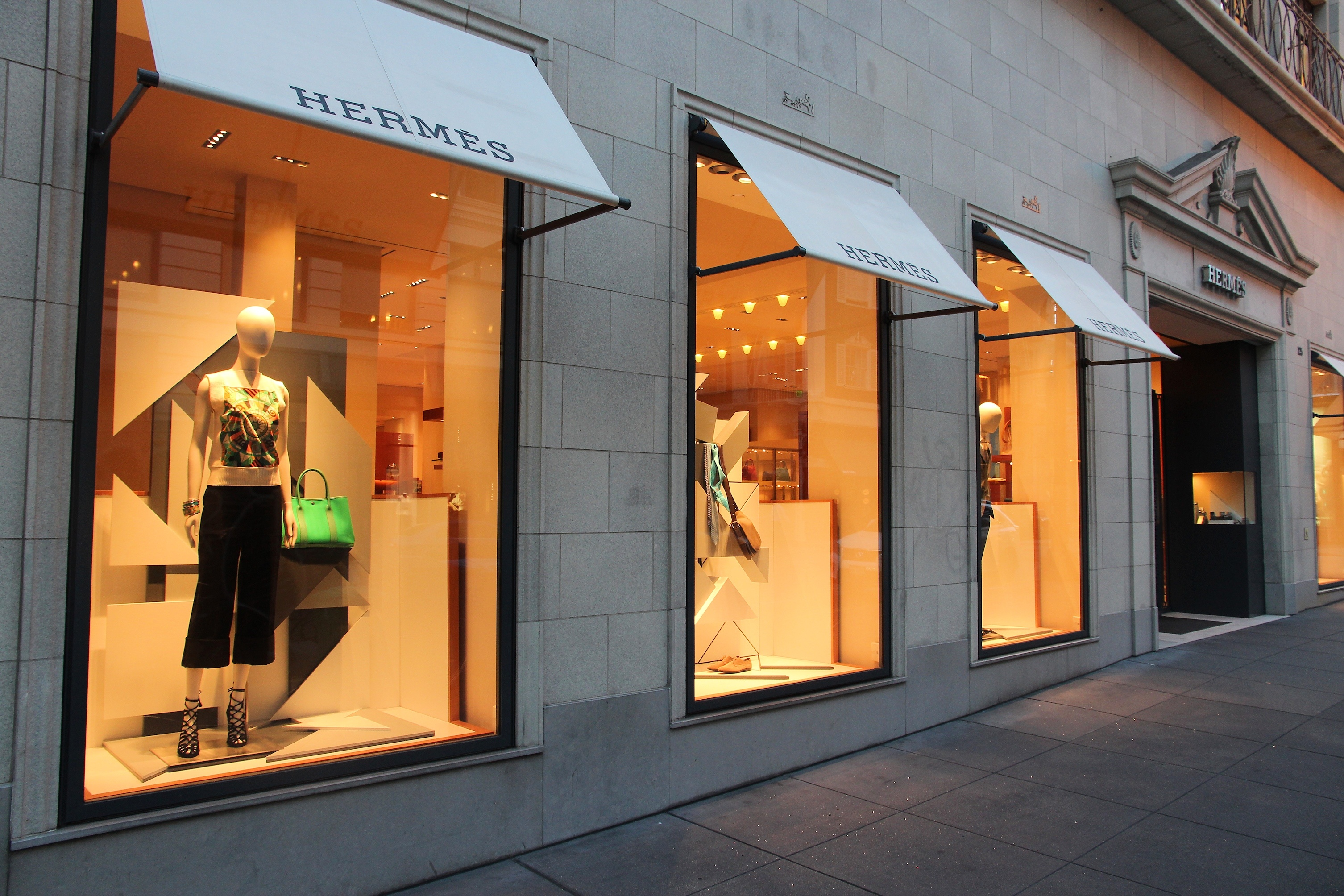
Image: istock
This continuity reduces fashion risk, extends product life cycles and reinforces trust, advantages that are rare at scale in luxury.
Hermès’ vertical integration further strengthens this position. The group controls almost every step of its value chain, from sourcing raw materials to tanning, design and manufacturing. This control protects quality, limits the ability to increase supply rapidly and creates barriers that are difficult for competitors to replicate. Importantly, it also allows Hermès to invest steadily in artisanal capacity, even when industry conditions are challenging, without compromising standards or margins.
Over time, this discipline has translated into exceptional pricing power. Hermès has consistently raised prices across cycles without undermining demand, reflecting both brand strength and deliberate supply constraints. The credibility of this pricing power is reinforced by the secondary market. Data consistently shows Hermès products retaining, and in many cases exceeding, their original retail price, with average resale values meaningfully above purchase price for flagship bags. In effect, the resale market validates Hermès’ primary pricing strategy and reinforces consumer confidence in the brand as a long-term store of value.
Crucially, Hermès does not attempt to clear excess demand. Production growth is constrained by artisan training timelines and capacity discipline, not by the level of customer interest. Waiting lists are a feature, not a failure, of the model. This ensures discounting is avoided and that demand consistently exceeds supply, protecting both margins and brand equity.
In a well-known book called Kapferer on Luxury, Jean-Noël Kapferer describes the central dilemma facing luxury brands: how to grow while preserving rarity and exclusivity. Many brands resolve this tension poorly, expanding volumes or distribution too aggressively during strong periods and eroding their long-term positioning in the process. Hermès stands out as one of the few large luxury companies that has solved this dilemma strategically. Growth is achieved through incremental capacity additions, selective category expansion and pricing rather than through volume acceleration. The company accepts slower short-term growth in exchange for durability and compounding over decades.
Every enduring investment case has areas of debate, and for Hermès this is valuation. The company trades at a significant premium to global luxury peers on most metrics, despite operating with deliberately constrained volume growth and exposure to discretionary consumer demand. For some investors, this premium appears difficult to justify, particularly when compared with peers that offer higher near-term growth or broader category exposure.
We believe the premium reflects structural characteristics that are both durable and rare. Hermès has delivered exceptional consistency in returns on capital and earnings through cycles, underpinned by disciplined supply, minimal discounting and limited fashion risk. This reduces downside volatility and supports higher through-cycle multiples. Family ownership and a relatively low free float further reinforce this dynamic, creating a form of scarcity at the equity level. The controlling shareholders’ long-term stewardship limits the risk of value-destructive strategic decisions, while the limited availability of comparable assets with similar quality, durability and governance characteristics provides ongoing valuation support.
The benefits of the Hermès model have been particularly evident through the recent challenging period for the luxury sector. Slowing global demand, softer Chinese consumption and inventory pressure have led to revenue declines and margin contraction for many peers. Hermès has stood apart. Growth has moderated but remained positive, margins have proven resilient, and inventory discipline has been maintained. The company’s exposure to the highest-income consumers, combined with its scarcity-driven strategy, has insulated the business from the more cyclical elements of aspirational luxury demand.
Ultimately, Hermès is not simply a luxury brand. It is a structurally advantaged business with rare durability, built on craftsmanship, restraint and long-term thinking. That combination has allowed it to protect brand equity, sustain pricing power, and compound value across cycles, supporting its place as a high-quality, long-duration holding within a global equity portfolio.
Hannah Dickinson
Sector Head Franchises & Healthcare
Sources: Company filings
Important Information: This material has been delivered to you by Magellan Asset Management Limited ABN 31 120 593 946 AFS Licence No. 304 301 trading as Magellan Investment Partners (‘Magellan Investment Partners’) and has been prepared for general information purposes only and must not be construed as investment advice or as an investment recommendation. This material does not take into account your investment objectives, financial situation or particular needs. This material does not constitute an offer or inducement to engage in an investment activity nor does it form part of any offer documentation, offer or invitation to purchase, sell or subscribe for interests in any type of investment product or service. You should obtain and consider the relevant Product Disclosure Statement (‘PDS’) and Target Market Determination (‘TMD’) and consider obtaining professional investment advice tailored to your specific circumstances before making a decision about whether to acquire, or continue to hold, the relevant financial product. A copy of the relevant PDS and TMD relating to a Magellan Investment Partners financial product may be obtained by calling +61 2 9235 4888 or by visiting www.magellaninvestmentpartners.com
Past performance is not necessarily indicative of future results and no person guarantees the future performance of any financial product or service, the amount or timing of any return from it, that asset allocations will be met, that it will be able to implement its investment strategy or that its investment objectives will be achieved. This material may contain ‘forward-looking statements’. Actual events or results or the actual performance of a Magellan Investment Partners financial product or service may differ materially from those reflected or contemplated in such forward-looking statements.
This material may include data, research and other information from third party sources. No guarantee is made that such information is accurate, complete or timely and no warranty is given regarding results obtained from its use. This information is subject to change at any time and no person has any responsibility to update any of the information provided in this material. Statements contained in this material that are not historical facts are based on current expectations, estimates, projections, opinions and beliefs of Magellan Investment Partners or the third party responsible for making those statements (as relevant). Such statements involve known and unknown risks, uncertainties and other factors, and undue reliance should not be placed thereon. No representation or warranty is made with respect to the accuracy or completeness of any of the information contained in this material. Magellan Investment Partners will not be responsible or liable for any losses arising from your use or reliance upon any part of the information contained in this material.
Any third-party trademarks contained herein are the property of their respective owners and Magellan Investment Partners claims no ownership in, nor any affiliation with, such trademarks. Any third-party trademarks contained herein are the property of their respective owners, are used for information purposes and only to identify the company names or brands of their respective owners, and no affiliation, sponsorship or endorsement should be inferred from such use. This material and the information contained within it may not be reproduced, or disclosed, in whole or in part, without the prior written consent of Magellan Investment Partners. (080825-#W17)